Posted on Leave a comment

Tokenized Gold: Cryptocurrency and Blockchain Protocols

Gold Bar

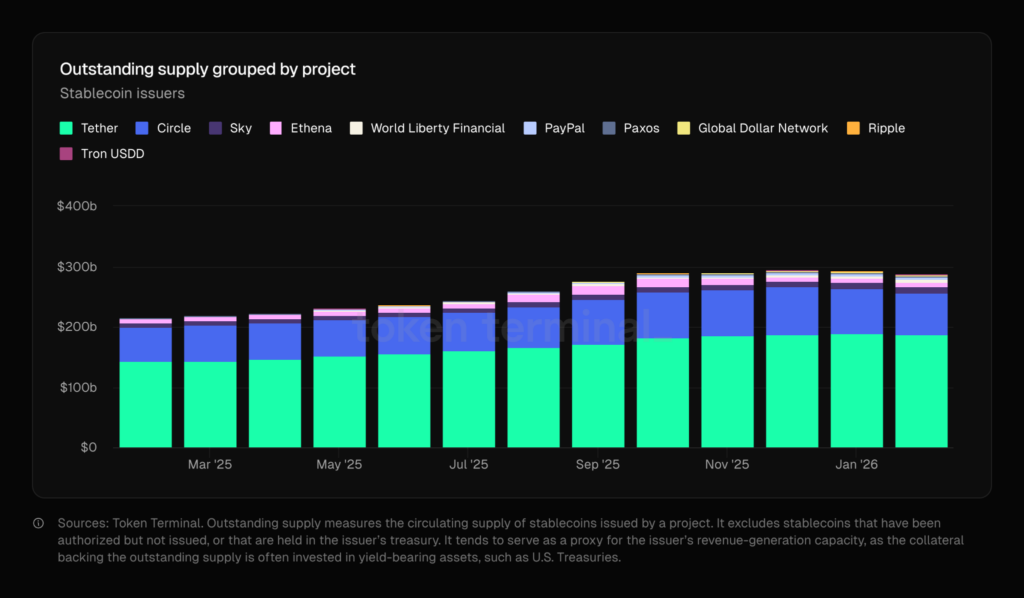
The legacy finance system of banking and the payments industry is very fragmented. Dollar stablecoins are needed in most of the world because it is so hard for average people to get bank accounts with dollars. These foreign businesses and consumers need to securely move their money as their local currencies lose value versus the dollar. Stablecoins offer cheaper and faster movement, a programmable digital dollar, and 24/7 access to those dollars.

In our podcast Crypto and Down, we discuss the role of stablecoins in the blockchain ecosystem and their differences in our February 4th Episode. Watch here:

Different Types of Stablecoins

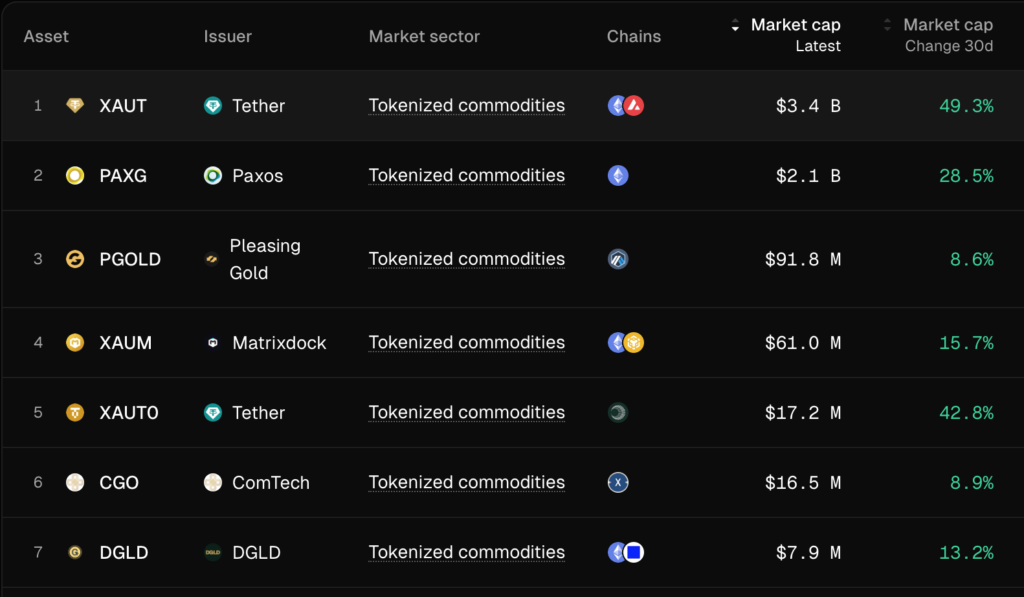
There are 4 main types of stablecoins that run on blockchains Fiat collateralized, Crypto collateralized, Algorithmic, and Commodity collateralized. Fiat Collateralized Stablecoins like USDT and USDC are the most popular. These tokens are backed by fiat currency, government treasuries, or cash. Crypto Collateralized stablecoins are backed by a basket of different crypto currencies. Stablecoins like DAI are over collateralized by cryptocurrencies like Ethereum and others. Meaning for every one dollar of DAI issued, you would need two dollars of Ethereum. MakerDAO is a company that issues and collateralizes DAI through various smart contracts. Algorithmic Stablecoins are backed via smart contracts or algorithms. These rules control the circulating supply and the price of the token. For example, if the token lost its dollar peg tokens would be issued or removed from the overall supply to adjust the price back to a dollar. Popular coins of this type include USDD and Frax. Commodity Stablecoins are usually backed by physical assets like metals, oil, real estate, etc. The most popular versions are Tether Gold (XAUT & XAUT0) and Paxos Gold (PAXG)

An overlooked reason for the increase in the price of Gold is that companies Paxos and Tether are continually buying this metal. Of course, other buyers include Central Banks and countries like Poland and Azerbaijan purchasing gold for their reserves. Paxos and Tether provide different infrastructure models for stablecoins issuance. They are competing in emerging markets and the United States. These leaders in the Stablecoin space bring tokenized Gold to the market with verifiable reserves. Gold backed crypto currencies are on the rise. Buyers of these assets get access to gold without having to store it physically. Tokenized gold allows people to have verifiable fractional ownership.  
Hyperliquid: The Rise of Commodity Perpetuals

Another protocol seemingly benefiting from the surge in metal prices is Hyperliquid. In late January of 2026, Hyperliquid token rose during a commodities trading frenzy on the platform. Hyperliquid is a blockchain that enables Perpetual futures. Perpetual futures, aka perps, are crypto derivative contracts that allow traders to speculate on an asset’s price without an expiration date or ownership of the underlying token.
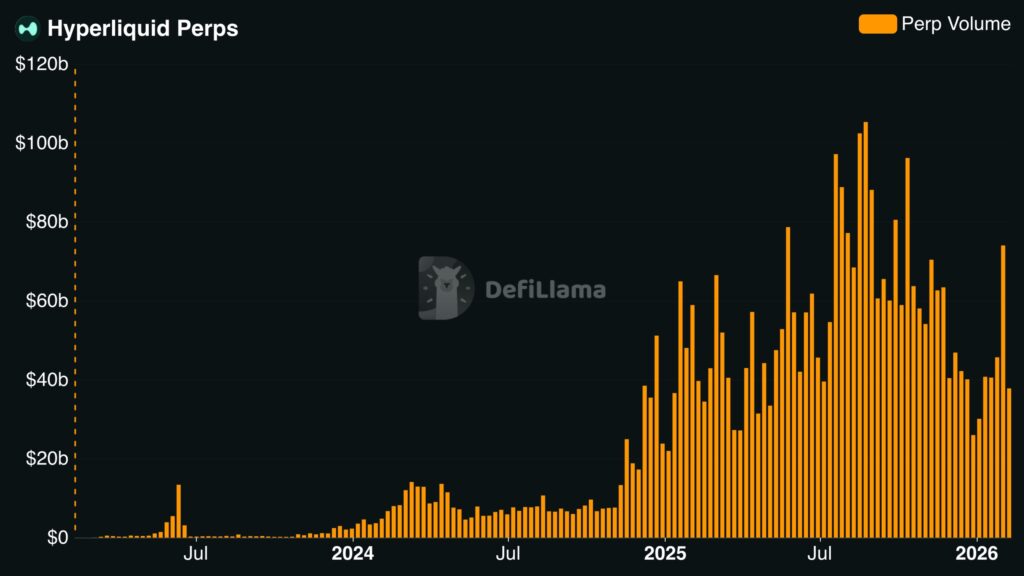
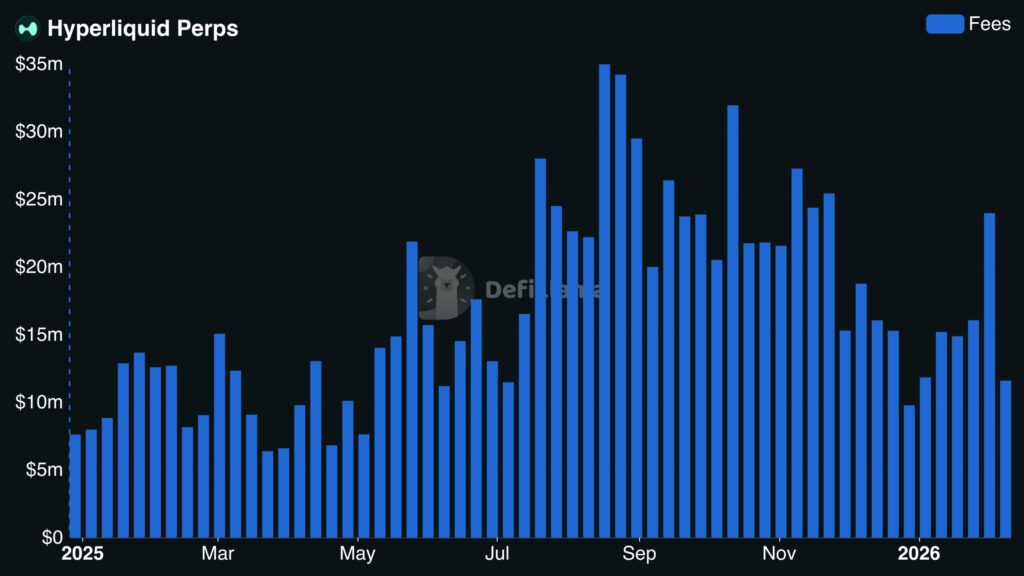
The token prices and activities have increased on top Perpetuals platforms with the rise of gold and silver. This trading frenzy generated more fees for the Hyperliquid platform. Hyperliquid uses the revenue from these fees to buy back and burn the Hype token. This makes the price action bullish in the eyes of many but this is still up for debate on whether this buyback model will continue to drive price appreciation.
Tether Impacts Gold Markets

Per Coindesk, Tether is buying close to 1 billion dollars worth of Gold every month. Tether plans to continue these efforts for the next few months. Per Coindesk, Tether is buying two tons of gold per week. And they’ve added 140 ton stockpile that is worth around 24 billion. They may be hedging their bets that the United States will renew their efforts in taking Tether to court. Tether has two tickers for tokenized Gold XAUT and XAUT0. The former is deployed on blockchains such as Ethereum and Avalanche; while the latter according to the UXAUT0 website, “brings programmable, omnichain mobility to one of the world’s most trusted store of value. XAUt0 enables fast, secure, and cost-efficient cross-chain transfers while maintaining a strict 1:1 backing with XAUt0, redeemable for physical gold held in Swiss vaults”.

Paxos Gold USD Flows

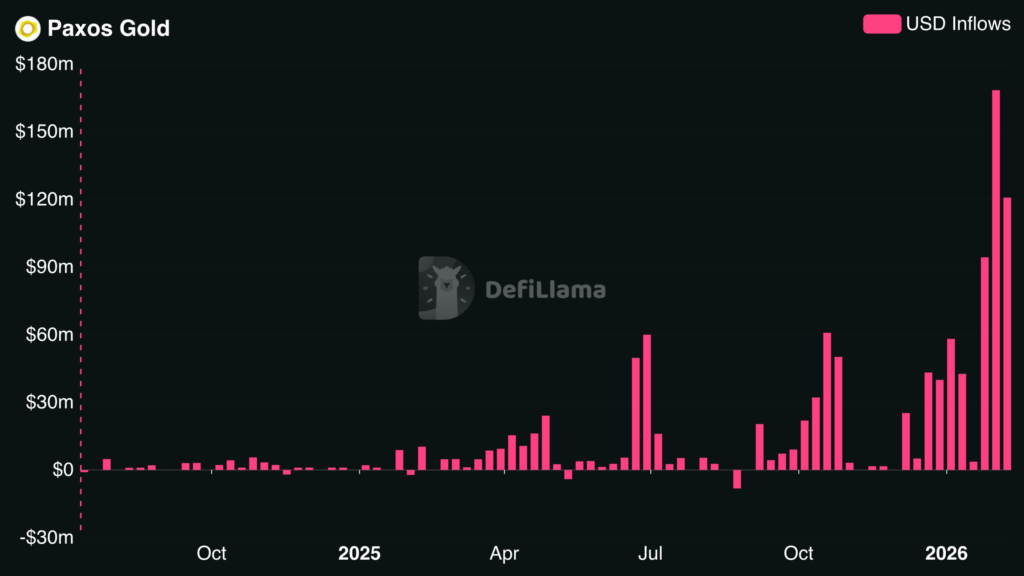
Paxos is a blockchain and tokenization infrastructure platform. They operate an internet based financial system and offer a suite of services to institutional clients such as banks and FinTech companies. For example, PayPal, Nubank, Venmo, interactive brokers, and others use Paxos to offer crypto services. Paxos’ gold token experiences massive inflows from crypto investors. An influx of US dollars have flowed into the Paxos Gold protocol. Their gold tokenized gold reserves sit in London vaults. 
The Paxos Value Proposition

I watched an interview with Raol Paul and Paxos Co-Founder and CEO, Charles Cascarilla. This was very interesting and insightful because it is rare to hear directly from a builder/founder in the crypto space. Charles over the past decade has set his company into a position to capitalize on the United States push into cryptocurrency and stablecoins. After watching their discussion, I came away with a better understanding of Paxos value proposition and a framework to view this new era in cryptocurrency. You can find the full interview here :

Paxos solutions and services combine infrastructure and tokenization. Their wallets enable firms to launch tokens, buy and sell crypto. They also allow merchants to accept payment in stablecoins and turn those payments into cash when necessary. The solutions they provide are a gold token and other tokenized dollars through stablecoins. They are now issuing a yield bearing stablecoin. Charles described how Paxos’s neutral infrastructure is key to their success and value proposition that make them attractive to a variety of institutions. It is irresponsible for institutions to rely on digital networks that are provided by competitors.
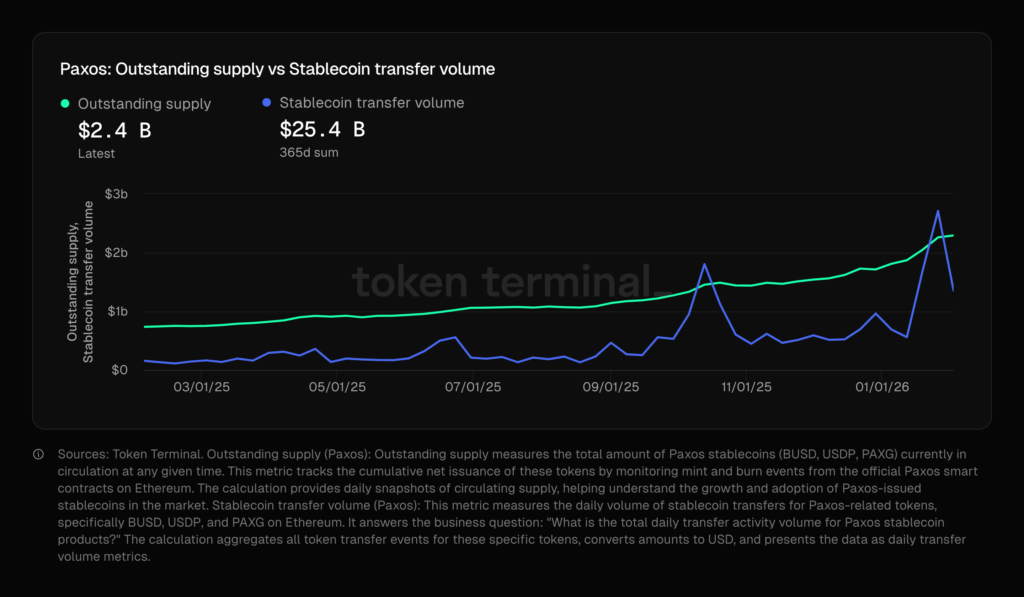
Charles described how Paxos’s stablecoin offerings differ from the Tether and Circle in that Paxos gives their stable token as a cash equivalent. Anyone who purchases a USDC or USDT is giving these companies a zero interest loan. These companies are taking that loaned dollar and purchasing US treasuries and other assets while the customer assumes the liability. Instead, Paxos set up their stablecoin’s through a trust to be a cash equivalent. Per Charles, no matter what happens to the company Paxos, users of their stablecoins will always be able to redeem. He also believes that this crypto cycle is a fundamental driven cycle, instead of narrative driven. In the past, Crypto cycle participation was mostly driven by price. Charles expects that all financial institutions will be launching crypto and stablecoin applications in the near future.

Bankruptcy Risk

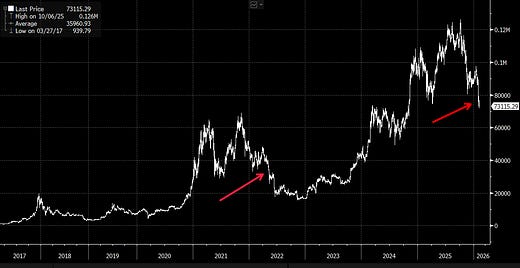
Famous investor Michael Burry, known for predicting the subprime mortgage crises in 2008. He is warning investors that if bitcoin’s price continues to drop silver and gold may fall along with it. He suggests that late January to early February’s big sell off in Gold and Silver was attributed to bitcoin’s selloff. He sees continued price depreciation in bitcoin leading to bankruptcies  for crypto holding companies and bitcoin miners. In his sub stack he posted a chart saying he looks at patterns and the price of Bitcoin is in a similar pattern as the 2020 – 2022 timeframe. Michael says, “What rescued the markets from the grip of a banking crisis in 2023 was the AI trade”
Even with the historic gains in the metal markets there is still significant risk to cryptocurrency and metal investors as these sectors have become intertwined. Since Paxos and Tether claim to have the actual reserves for their tokenized gold they may be able to withstand a major downturn in the market. Time will tell if these two companies are less risky than traditional exposure to metals through ETFs and paper where the companies offering these products don’t have the reserves to back the issuance.

Posted on

Blockchain and Cryptocurrency Trends: January 2026

January is the time for new year resolutions and ironing out investment plans for the year. I’ve researched last year’s analytical trends in blockchain and cryptocurrency to better predict the opportunities for profit. Let’s begin with Cryptocurrency and Blockchain. Research from Coindesk found that value is becoming more isolated to the application layer. For example, L1s capture 90% of the market share in terms of their Market capitalization. However, they are only collecting 12% of fees generated. Economic forces are pushing down the price of Layer 1 blockchains allowing more inflows and competition between blockchains. Essentially, layer 1 blockchain security and throughput became commoditized.

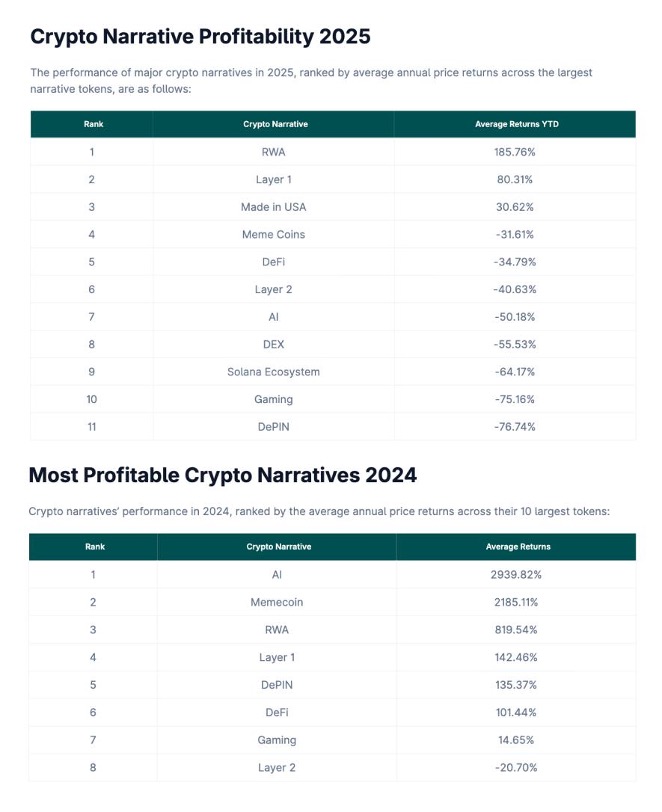
Progressing through 2026 the narratives I will monitor are Real World Assets (RWA), Decentralized Exchanges (DEX), and Non-Custodial Protocols. Below are application-level narratives that drove prices the past two years.

Profitable Crypto Narratives
Profitable Crypto Narratives 2024 and 2025 from DeFi Llama

RWAs are split into 3 segments: Treasuries, Money Markets of Corporate Securities, and Commodities. Tokenized versions of Gold from Paxos and Tether (PAXG and XAUT) make up over 80% of commodity activity. Per Cryptoslate, Ondo finance controls 51.6 by value of the RWA market.

Decentralized Physical Infrastructure Networks (DePin) is a category that is seeming to gain momentum given the rise of AI funding and the push towards more data centers. This massive movement of capital is driving up the price of memory and everyday electronics. There may be opportunities for these projects to find more use cases and provide an outlet for new infrastructure to support the move to a new type of data storage and telecommunications.

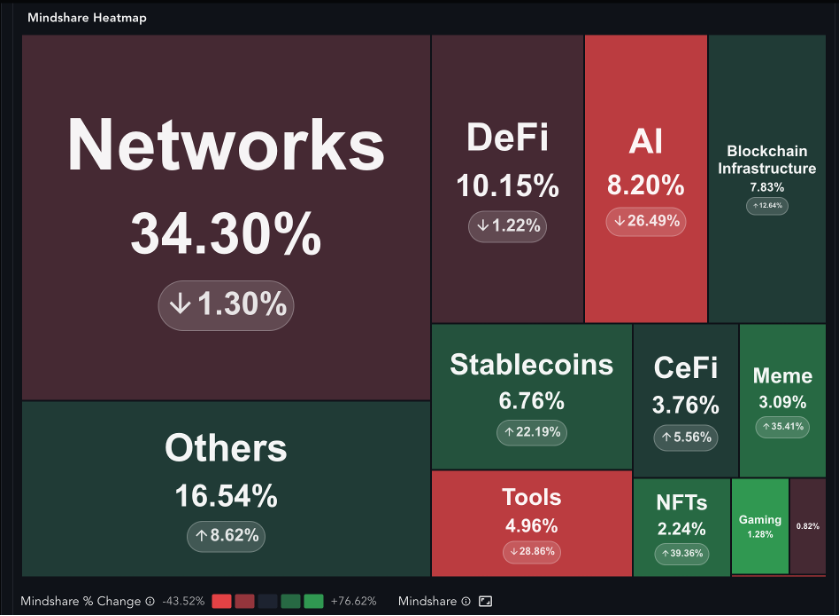
A snapshot on January 18th from Messari shows the mindshare and sentiment for different sectors in the blockchain ecosystem. Some of the cryptocurrencies that I will monitor fall into sectors that have increased month over month.

Messari Market Sentiment January 2026

Since the GENIUS ACT passed the United States House of Representatives and was signed into law by President Trump stablecoin projects are on the rise. Banks, Fintechs, and US government entities have all launched stable tokens in the past year. The State of Wyoming launched their State backed stablecoin frontier (FRNT) this month. There are carveouts in the Bill that allow non-custodial protocols to interact with stablecoins and banking infrastructure without needing banking licenses. There is an opportunity for developers, investors, and businesses to partner with these non-custodial protocols in order to build on stablecoin technology. The Trump’s family stablecoin and crypto project World Liberty FI partnered with the protocol Dolomite. This one example FinTech and banks incorporating blockchain protocols into their business models.

Blockchain Performance and Prediction Markets:

January Crypto Watch List:

The DTCC (Depository Trust & Clearing Corporation) will use the CANTON Network (CC) to tokenize their securities. Canton’s value proposition is a privacy based blockchain for institutions wholesale settlements. This project falls into the RWA sector and won’t be the only blockchain that the DTCC uses.  JP Morgan recently announced they will tokenize securities. Canton offers price appreciation exposure to its cryptocurrency as the network grows and the opportunity to become involved as a validator.

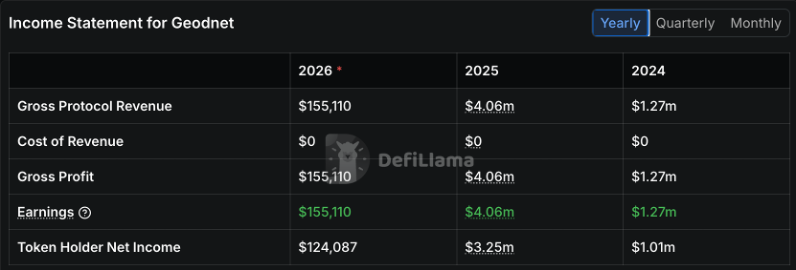
GEODNET’s (GEOD) purpose is to promote and deploy the world’s largest RTK network for everyone. RTK allows for positional tracking using satellites. Considering the massive investment into self-driving cars and autonomous drones, this may prove to be a long-term investment that includes digital and physical infrastructure.

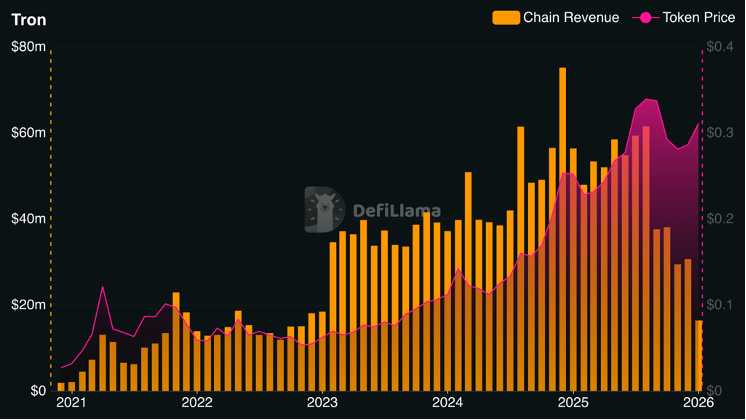
TRON (TRX) is a leader in global remittance. Stablecoin balances are driven by centralized exchange settlements, offshore payments, and custodial flows. They’ve had a steady growth in price performance the past few years. If the Tron blockchain maintains steady revenue and the number of active wallets increases so will the price.

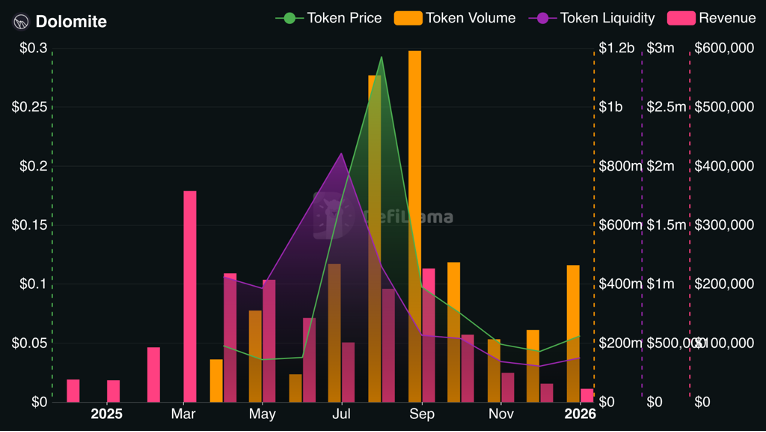
DOLO is a decentralized exchange (DEX) that offers lending, borrowing, and margin trading services. Their recent partnership with WLFI is a sign that WLFI is serious about using non custodial services to gain stablecoin market share. I will monitor their liquidity, revenue and volume for insight into the protocol’s profitability and measure USD inflows for continued growth. Time will tell if this protocol will be a long-term play.

Prediction Markets:

I’m betting on the prediction that China will invade Taiwan by June. It has been summarized by experts that the ideal time for China to invade Taiwan would be between the months of March and May due to weather conditions. As of writing this, the odds on Polymarket are 7%.

My next pick is for the Iranian leader to be out by the end of 2026. PolyMarket has the odds at 50% so there isn’t a huge upside. However, the man is almost 90 years old, and the recent riots and mass killings make me assume he’ll have to go one way or another. As I heard it said on the Geopolitical Cousins podcast this could be a scenario where the CEO is replaced and the board of directors stays on.

Stay ahead of the trends:

The Counter Markets Newsletter will show you how to live free of government and corporate tyranny while growing your wealth and liberty Sing up for: Countermarkets

Affiliates:      

Posted on

Best Digital Growth Strategy for B2B Apparel E-commerce in 2025

First Responders in Uniform

B2B Apparel Company, a 30-year-old custom t-shirt printing business, has recently undergone a change in ownership. The new owner recognizes the urgent need to revamp their archaic website and enhance their digital marketing efforts. The business primarily serves B2B clients and has historically relied on face-to-face interactions for client acquisition. Ownership aims to modernize the business to attract more clients and increase revenue.

eCommerce Product Challenges

Since the current website core web vital stats had a poor rating. There was no clear path to purchase or navigational structure that made a users buyer journey seamless. In a discovery call with the customer they gave a list of challenges they faced and we brainstormed a list of objectives that would make an impact on their business.

  • The website is outdated and lacks modern e-commerce functionalities.
  • Lack of a structured email marketing strategy and the ability to capture emails.
  • Current business focus is on a few large clients that have a minimal digital presence.
  • The need to show value with their logistics carriers and integrate them seamlessly into the website.

eCommerce Strategy

  • Revamp the outdated website to improve user experience and functionality.
  • Implement a structured email marketing strategy.
  • Optimize the website for digital marketing.
  • Enable online order submissions.
  • Increase revenue by expanding the client base.

Ecommerce Product Management Strategy

Website Redesign Steps

  • Select a modern, fitting theme that aligns with the brand.
  • Improve product discovery on the homepage with organized navigation, product collections, and clear calls to action.
  • Add engaging content such as a “Why Buy from Us” and “Hello from the Owner” video.

Functional Enhancements:

  • Enable online order submissions for both individual and corporate clients.
  • Ensure robust search functionality by SKU, product name, or part number.
  • Integrate pivotal information around invoices, quotes, and estimates.

SEO and Analytics:

  • Install Google Search Console, google tag manager, and Google Analytics 4 to monitor website performance.
  • Use EVISIO project management software to identify and address SEO opportunities.
  • Improve page speed by compressing images and removing unnecessary widgets.

Digital Product Marketing Strategies

Email Marketing:

  • Develop a structured email marketing strategy using platforms like Klaviyo or Mailchimp.
  • Give customers an incentive to leave their emails. Provide them with a leave behind collateral like a buyer guide, catalog, White paper if they enter their email address.
  • Send regular newsletters, promotional offers, and updates to engage with clients.

Content Strategy:

  • Produce consistent, high-quality content including blog posts, videos, and social media updates.
  • Create a content calendar to organize and schedule posts.

Local Digital Marketing:

  • Leverage platforms like Hibu for local digital marketing to reach small businesses in the area.
  • Optimize for local searches by including relevant keywords and location-based content.

Platform Selection:

  • Evaluate Shopify or BigCommerce for their scalability, app ecosystem, and API functionality.
  • Consider the pros and cons of each platform to determine the best fit for the business needs.

ERP Integration:

  • Integrate the existing ERP system with the new e-commerce platform to streamline operations and improve efficiency.

Security and Compliance:

  • Ensure the new website complies with data protection regulations and provides a secure shopping experience for clients.

Product Strategy Implementation

Website Redesign:

  • Benchmark current performance metrics and define clear redesign goals.
  • Protect high-performing SEO pages and analyze competitors for best practices.
  • Choose the right software and platform to support the business needs.

Content Creation and Marketing:

  • Develop a content strategy that includes regular blog posts, videos, and social media updates.
  • Implement a structured email marketing campaign to engage with clients regularly.

Local SEO:

  • Optimize the website for local searches and leverage local digital marketing platforms.
  • Use SEO tools like EVISIO project management software and best practices to improve search engine rankings and drive traffic to the website.

By implementing these strategies, my customer aims to

  • Enhance user experience and functionality of the current website, while planning steps to migrate to a new platform.
  • Increase brand visibility and attract more clients through organic traffic and monitor implementations with the EVISIO project management tool for SEO.
  • Improve operational efficiency through ERP integration.
  • Drive revenue growth by expanding the client base and leveraging digital marketing.

This customer’s focus on modernizing their website, optimizing digital marketing efforts, and implementing structured email campaigns will position the business for sustained growth and increased revenue. By addressing current challenges and leveraging strategic tools and platforms, leadership can transform the business into a more robust and competitive entity in the custom t-shirt printing industry.